
Crack Filling and Repair Services
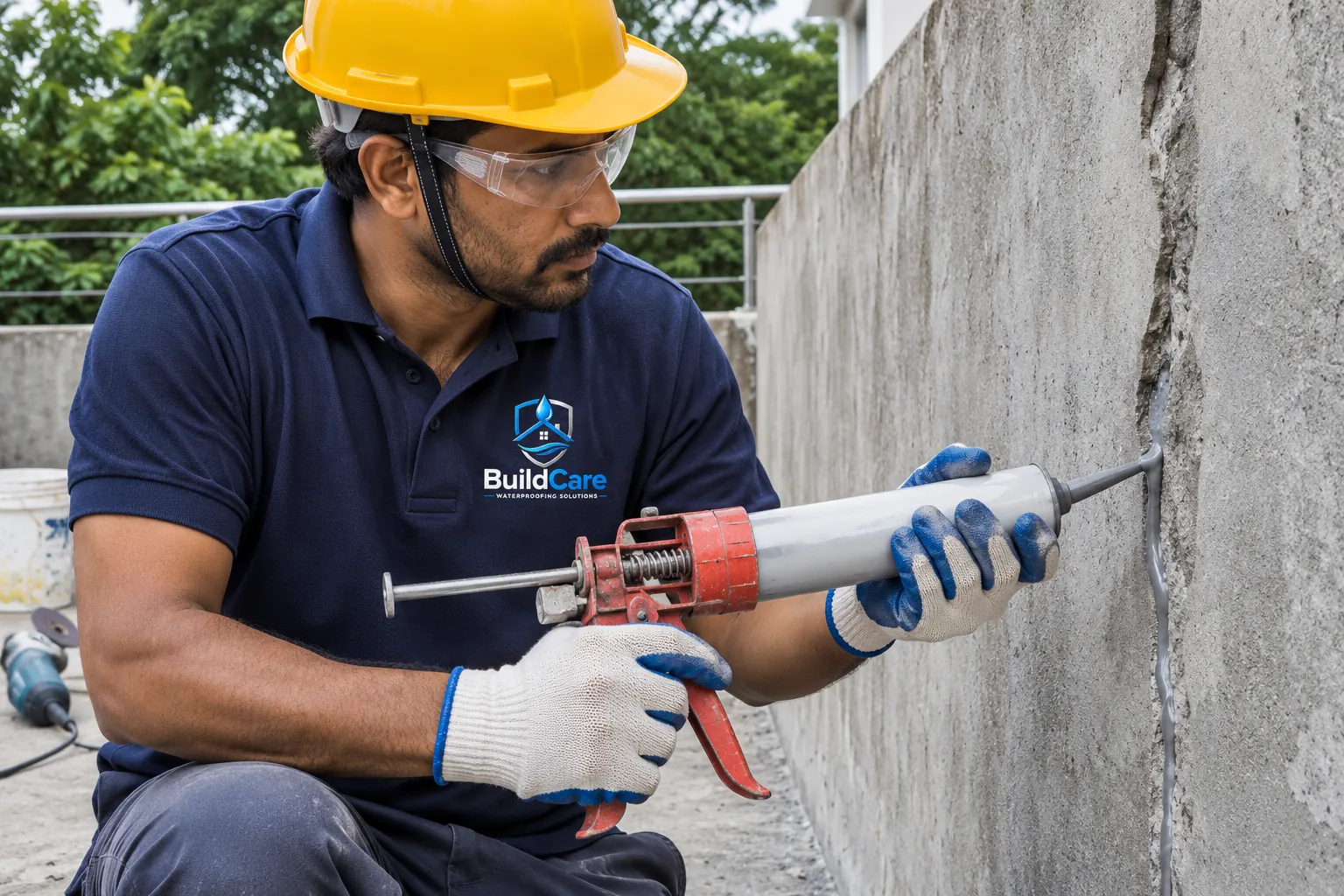
Crack Filling and Repair for Better Building Protection
Crack filling and repair – repair of cracks in plaster, concrete, or masonry involves analyzing the crack width, depth, movement, and cause and determine, which method of repair to use. Not all cracks are created equally. Some cracks are surface, non-structural cracks and some can be signs of structural movement or distress.
Trust & Credibility
Buildcare has 10+ years of experience and 300+ completed projects. The approach begins with understanding the symptoms and likely source before recommending a repair. The actual scope and materials should be confirmed for each site.
- 10+ years of experience
- 300+ completed projects
- Assessment-led recommendations
- Attention to repair preparation and detailing
About Crack Filling and Repair
Crack filling and repair we evaluate concrete, plaster, or masonry cracks and then choose the correct repair method based on crack width, depth, and location, as well as whether the crack has moved or changed and how the movement happened. Different cracks require different repairs. Some surface cracks are nothing to worry about, others should be investigated.
A visible damp patch does not necessarily pinpoint the entry point. Water may be running down slabs, along joints or behind finishes before becoming visible indoors. The assessment should take into account an extended area, as well as other potential sources like plumbing and drainage.
Common Problems & Warning Signs
The following symptoms may indicate a need for further inspection. Similar symptoms can have more than one cause, so the source should be confirmed before treatment.
- Visible lines or openings in concrete, plaster or masonry
- Water seepage through cracks during rainfall
- Cracks that reappear after surface filling
- Cracks near joints, openings or slab edges
- Crack width or length changing over time
Causes & Risk Factors
Common causes relevant to this service include:
- Drying shrinkage in concrete or plaster
- Thermal movement and changes in moisture
- Building settlement or structural movement
- Corrosion-related expansion around reinforcement
- Poor construction joints or local stress concentration
Methods & Technical Solutions
The techniques listed below are used commercially for certain repair conditions. They are not interchangeable, and like and suitable for the substrate moisture movement, water pressure, and repair purpose. There is no implication that Buildcare is supplying all the listed products or systems.
- Surface crack filling fillers can be applied to intact and non-structural surface cracks with proper cleaning and preparation.
- Flexible sealant application sealants with flexure capabilities could be suitable for some selected joints or cracks where movement is anticipated and joint layout is appropriate.
- Epoxy injection relevant cracks in sufficiently stable concrete could be replaced by a resin injection system if a bonding across the crack is acceptable and conditions are dry enough.
- Polyurethane injection water-bearing cracks can be repaired with appropriate injection resins that expand or react with moisture.
- Structural evaluation and fix Cracks exhibiting considerable movement offset corrosion or structural signs and symptoms of hanging are studied by an experienced structural qualified before the cosmetic fixing.
Benefits & Advantages
A suitable repair, correctly specified and executed, can help manage the identified leakage path and protect affected building elements.
- Matches the repair method to the crack type and condition
- Can help reduce water entry through suitable cracks
- Helps restore surface continuity in appropriate applications
- May reduce recurring deterioration when the cause is addressed
- Identifies cracks that need specialist structural assessment
Applications & Suitable Areas
This service may be relevant to the following building types and areas, subject to inspection and access:
- Concrete roof slabs and terraces
- Basement and retaining walls
- Plastered internal and external walls
- Water tanks and selected water-retaining structures
- Concrete floors and other suitable masonry surfaces
Frequently Asked Questions
Can all cracks be filled with ordinary filler?
No. Surface fillers are only suitable for a limited number of structurally stable, non-moving cracks. Active, water-filled, and structural cracks have to be tested and repaired in a different way.
Why does a crack reappear after filling?
The cause may remain if it is ongoing or not suitable with the crack motion or the substrate.
What is epoxy injection used for?
For some stable concrete cracks it can be applied where bonding and structural repair are beneficial.
What is polyurethane injection used for?
Polyurethane injection products can be used to seal and treat water bearing cracks and leaks through specific product systems given the crack and product system.
Are diagonal cracks dangerous?
Not all diagonal cracks are structural, but all cracks should be examined for their position pattern width, movement, and the symptoms associated.
Can crack repair stop water leakage?
Possible has the next treatment supplied for if the crack is the water route and also the fix is as the water tensions and movement.
Should cracks be repaired before waterproofing?
Generally, the cracks and joints should be treated during the substrate preparation stage, before the main waterproofing system.
When should an engineer inspect a crack?
Widened cracks, displacement, exposed, or corroding reinforcement, and other signs of structural distress should be evaluated by a qualified structural engineer.
Related Services
Discuss Your Crack Filling and Repair Requirements
Experiencing crack filling and repair concerns? Contact Buildcare to discuss the affected area and arrange the next step. The recommended treatment will depend on the findings of the site assessment.