
Foundation Waterproofing Services
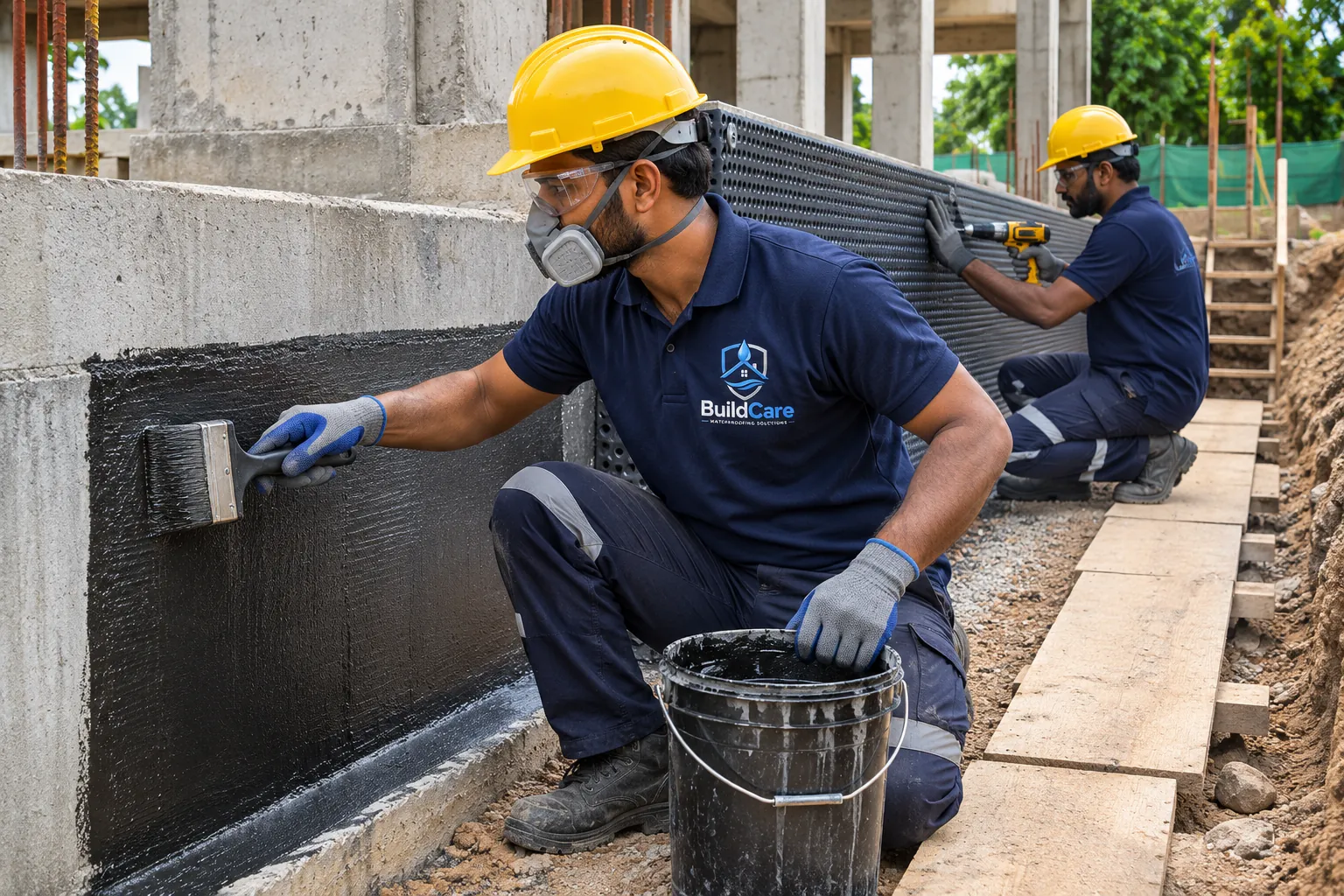
Foundation Waterproofing for Better Building Protection
foundation waterproofing to prevent water penetration in the foundation below grade and attached structures, foundation waterproofing is used. Buildcare brings over 10 years of experience and more than 300 projects completed foundation waterproofing. Understanding the site requirements will help identify the correct solution for your property.
Trust & Credibility
Buildcare has 10+ years of experience and 300+ completed projects. The team focuses on understanding site conditions, identifying relevant water-entry points and selecting an appropriate treatment approach.
- 10+ years of experience
- 300+ completed projects
- Assessment-led recommendations
- Solutions considered for different building requirements
About Foundation Waterproofing
Foundation waterproofing helps limit water penetration into below-ground foundation elements and adjoining structures.
System selection depends on substrate, moisture condition, exposure, movement, drainage, existing finishes and access. Inspection and preparation are important parts of a suitable approach.
Common Problems & Warning Signs
These symptoms may indicate a need to inspect the affected area. Similar symptoms can also have other causes, so the source should be checked.
- Dampness at lower-level walls
- Water ingress near foundation areas
- Seepage at construction joints
- Moisture in below-ground rooms
- Deteriorated protective layers
Causes & Risk Factors
Water penetration can develop from construction details, ageing materials, environmental exposure and maintenance issues. Common causes include:
- Groundwater or surface water
- Cracks and honeycombing
- Poor membrane continuity
- Unsealed penetrations
- Membrane damage during backfilling
Methods & Technical Solutions
These are industry techniques, which may be available where technically feasible. Confirm these are suitable for site conditions and product data. This list does not imply that Buildcare sells all of these listed products.
- External sheet membranesinstalled with appropriate laps and terminations.
- Liquid-applied membranesideal for suitable substrates and shapes.
- Cementitious systemsrecommended treatments for concrete and masonry.
- Waterstop and joint systems - specifications for construction and movement joints.
- Drainage and protection layerscomponent of integrated below-ground design.
Our Work Process
A structured workflow helps match the selected treatment to the site condition.
- Initial inspection review the affected area and visible symptoms.
- Assessment identify likely water paths, substrate condition and vulnerable details.
- System selection determine an appropriate treatment based on exposure and compatibility.
- Surface preparation clean and prepare the substrate and carry out required repairs.
- Application install the selected system according to technical instructions.
- Review inspect the completed work and conduct appropriate checks where specified.
Benefits & Advantages
When correctly specified, installed and maintained, a suitable system can help manage water penetration and protect treated building elements.
- Helps reduce water penetration
- Supports protection of below-ground spaces
- Addresses joints and penetrations
- Protects membranes during construction
- Supports groundwater management
Applications & Suitable Areas
This service may be relevant to the following property types and locations, subject to construction details and site conditions:
- Residential foundations
- Apartment and commercial foundations
- Retaining walls
- Basement perimeter structures
- Selected infrastructure foundations
Frequently Asked Questions
What is foundation waterproofing?
Membranes, coatings and details limit water penetration into foundation structures.
When should it be installed?
Usually during construction before backfilling, though remedial options may exist.
Is drainage needed?
Depending on groundwater and soil conditions, drainage may be important.
Can it stop rising damp?
Some water paths may be addressed, but rising damp can require specific measures.
What damages a membrane?
Poor preparation, sharp projections and careless backfilling can damage it.
Are all membranes the same?
No, they vary in material and suitability for pressure and substrate.
Can existing foundations be treated?
Options depend on access, structure and moisture source.
Why are joints important?
Joints can become water paths if waterstops or sealing details fail.
Related Services
Discuss Your Foundation Waterproofing Requirements
Need help with foundation waterproofing? Contact Buildcare to discuss the affected area, understand possible treatment options and arrange the next step. The recommended system and scope depend on the site assessment.