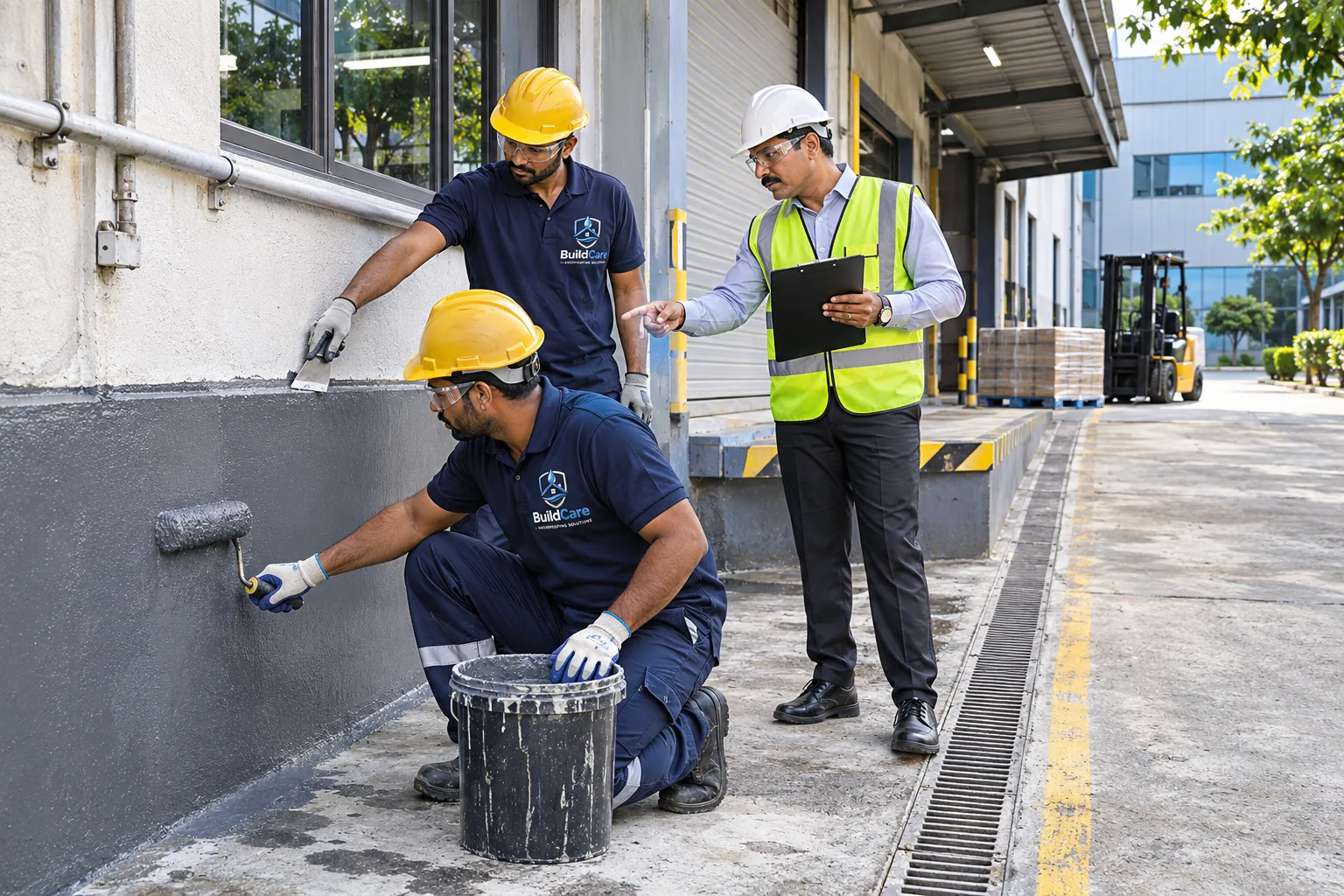
Suitable treatments begin with assessing the surface, water exposure and repair requirements.
Commercial & Industrial Waterproofing
Buildcare offers tailored commercial and industrial waterproofing solutions to protect concrete surfaces, roofs, parking areas, and expansion joints across factories, complexes, and high-rise structures.
- Waterproofing solutions for commercial and industrial properties
- Structural waterproofing for vulnerable building areas
- Expansion joint and parking area waterproofing
- Waterproofing assessments for high-rise buildings
Commercial Property WaterproofingIndustrial Facility SolutionsSite-Specific Treatment SelectionProject Enquiries Across Telangana and Andhra Pradesh
About Commercial & Industrial Waterproofing
Water leakage can occur from the roofs, concrete slabs, joints, and parking decks on commercial and industrial properties, resulting in surface damage and ongoing maintenance issues.
Buildcare assesses affected areas and possible leakage sources in commercial, industrial and larger buildings, then recommends suitable treatments based on site conditions.
Common Waterproofing Problems
Look out for these signs of water ingress in commercial and industrial properties:
- Concrete seepage: Moisture appears around slabs, joints or other concrete surfaces.
- Moisture on walls and ceilings: continuous damp patches on walls or ceilings, which reveal water leaks from open or adjacent surfaces.
- Cracks and leaking joints: Cracked concrete or deteriorated joint seals allow water to enter.
- Parking deck seepage: Water entering through weak concrete, joints, or drains.
- Paint and coating failures: Surface damage related to moisture exposure over time.
- Standing water: Water accumulated due to a blocked outlet or drainage problem.
- Recurring leakage: Repeated water entry can indicate an unresolved source or an unsuitable previous repair.
Identifying the source of leakage is an important step before selecting a treatment.
Common Causes of Waterproofing Failure
Water ingress in commercial and industrial buildings may result from:
- Missing, damaged or deteriorated waterproofing membranes
- Concrete or masonry cracks
- Damaged expansion-joint seals
- Vulnerable areas in the vicinity of construction joints and service penetrations.
- Poor drainage and standing water
- Weather conditions and movement of the structure
- Inadequate surface preparation during previous repairs
- Waterproofing materials that are unsuitable for the intended application
The correct treatment depends on the source, extent and location of the problem. Applying a coating over a damaged surface without addressing the underlying defect may not resolve the issue.
Commercial & Industrial Waterproofing Services
Buildcare offers the following service categories for commercial properties, industrial facilities and larger buildings.
Waterproofing solutions for industrial facilities, including suitable roofs, concrete surfaces and vulnerable areas exposed to rainwater and moisture. The treatment is selected according to the facility's requirements and site conditions.
Explore ServiceWaterproofing assessments and treatment options for offices, retail spaces, commercial complexes and other business premises to help manage water ingress in vulnerable areas.
Explore ServiceWaterproofing treatment for selected structural areas where water penetration needs to be controlled. Material selection depends on the substrate, exposure conditions and project requirements.
Explore ServiceTreatment of suitable expansion joints to help prevent water ingress while allowing for the movement required by the building design.
Explore ServiceWaterproofing solutions for suitable parking decks and structures, considering water exposure, drainage, surface condition and vehicle traffic.
Explore ServiceWaterproofing assessments for vulnerable areas of high-rise buildings, including roofs, terraces, exposed walls, joints and other locations identified during inspection.
Explore ServiceOur Waterproofing Process
Step 1: Site Inspection and Assessment
Inspect the affected surfaces, visible defects, access conditions and project requirements. Further investigation may be needed when the leakage source is concealed.
Step 2: Surface Preparation
Prepare the treatment area for the selected system. Work may include cleaning, removing loose material and repairing relevant surface defects.
Step 3: Waterproofing Application
Install the approved waterproofing material, joint treatment or repair system following the application instructions of the product and site conditions.
Step 4: Curing and Inspection Checks
Allow the system to cure as specified, then carry out appropriate inspections or tests for the application and site conditions.
Frequently Asked Questions
What is commercial and industrial waterproofing?
Commercial and industrial waterproofing helps protect vulnerable building surfaces from water penetration using suitable membranes, coatings, joint treatments and repairs.
Which properties need industrial waterproofing?
Factories, warehouses, production plants and other industrial premises may need waterproofing based on their roofs, drainage, exposure and surface conditions.
What is the difference between commercial and industrial waterproofing?
Commercial waterproofing addresses offices, shops and other business properties. Industrial waterproofing may also need to account for operating conditions, equipment and specialised exposure. Both require a project-specific assessment.
Why is expansion joint waterproofing important?
Expansion joints allow for building movement. Damaged seals or waterproofing details can permit water entry, so treatment must accommodate the joint's design and movement requirements.
Can parking areas be waterproofed?
Suitable parking decks can be assessed for waterproofing. System selection considers traffic, drainage, surface condition and how the area will be used.
How is waterproofing selected for a high-rise building?
Treatment depends on the affected area, construction details, water exposure, surface condition and access. A site assessment helps identify suitable options.
How can I request a quote for a commercial or industrial project?
Call Buildcare on +91 9666 802 020 or complete the enquiry form. Include your location, building type, affected area and project requirements.
Discuss Your Project with Buildcare
Protect Your Commercial or Industrial Property from Water Ingress
Water leakage can create ongoing maintenance concerns for commercial buildings, industrial facilities and large structures. Identifying vulnerable areas and selecting a suitable waterproofing system are important steps in addressing these issues.
Contact Buildcare Waterproofing to discuss your project and enquire about service availability for your location.