
Wall Waterproofing Services
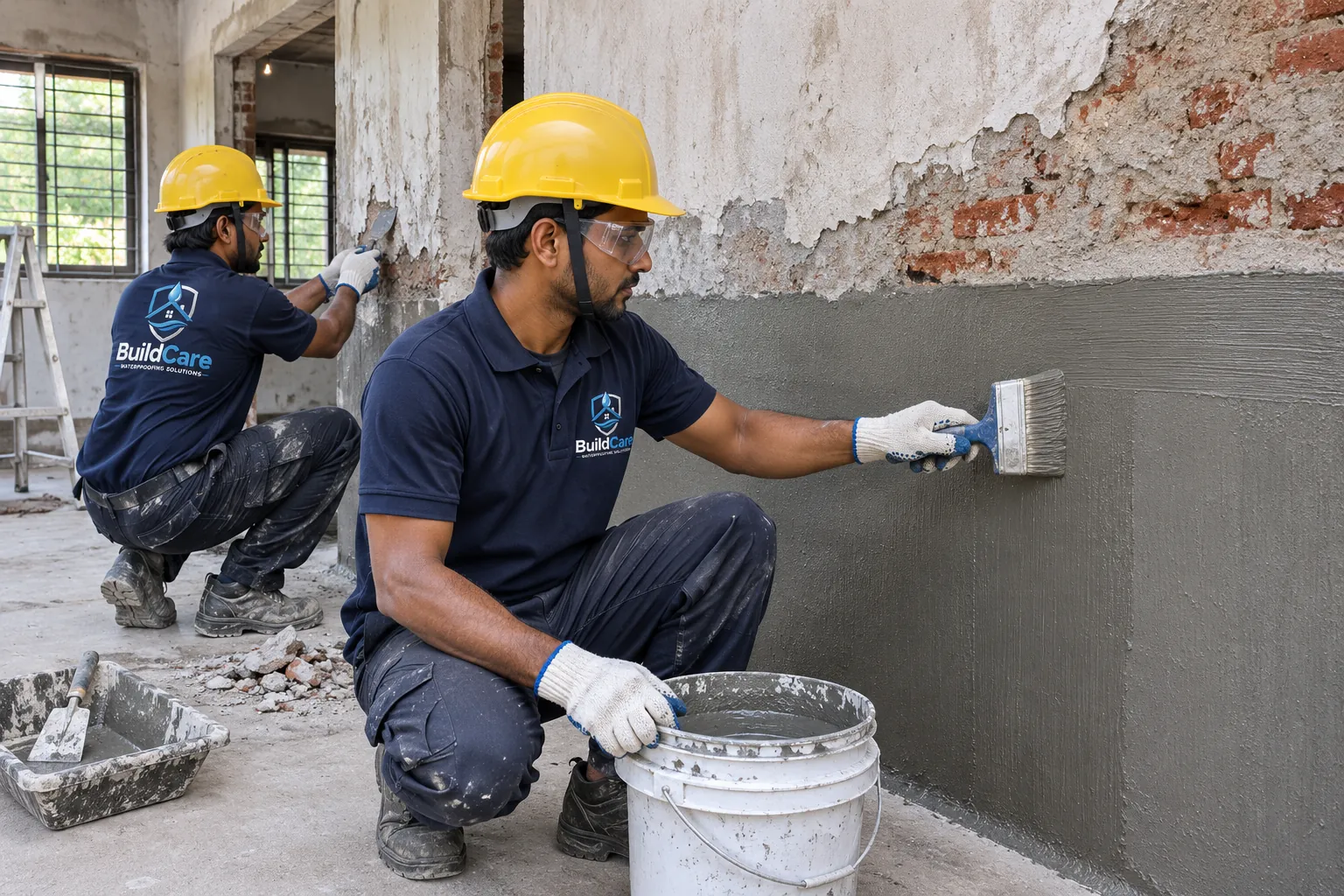
Wall Waterproofing for Better Building Protection
Wall waterproofing helps protect suitable wall surfaces from rain, ground moisture and water from adjoining wet areas. Buildcare brings 10+ years of experience and 300+ completed projects to its work.
Trust & Credibility
Buildcare has 10+ years of experience and 300+ completed projects. The team focuses on understanding site conditions, identifying relevant water-entry points and selecting an appropriate treatment approach.
- 10+ years of experience
- 300+ completed projects
- Assessment-led recommendations
- Solutions considered for different building requirements
About Wall Waterproofing
Wall waterproofing helps protect suitable wall surfaces from rain, ground moisture and water from adjoining wet areas.
System selection depends on substrate, moisture condition, exposure, movement, drainage, existing finishes and access. Inspection and preparation are important parts of a suitable approach.
Common Problems & Warning Signs
These symptoms may indicate a need to inspect the affected area. Similar symptoms can also have other causes, so the source should be checked.
- Damp patches and discolouration
- Peeling paint or damaged plaster
- White salt deposits
- Musty odour in persistently damp areas
- Water marks after rainfall
Causes & Risk Factors
Water penetration can develop from construction details, ageing materials, environmental exposure and maintenance issues. Common causes include:
- Porous exterior render
- Cracks in plaster or masonry
- Failed window sealants
- Ground moisture
- Concealed plumbing leaks
Methods & Technical Solutions
Listed below are industry practices that could be considered if technically appropriate. Confirm this is suitable to site conditions and product data. This list is not a confirmed list of all products supplied by Buildcare.
- Protective coating on the outsideappropriate façade protection can limit absorption of rain, whilst maintaining suitable vapour flow.
- Water repellent treatmentspecific treatments lessen absorptions on designated mineral surfaces.
- Crack repairthe repair material should match crack width, movement, and substrate.
- Joints sealingsealants shall be compatible with the window and façade joints.
- Damp-proofing productscheck the moisture pathway in advance of choosing a course of action.
Our Work Process
A structured workflow helps match the selected treatment to the site condition.
- Initial inspection review the affected area and visible symptoms.
- Assessment identify likely water paths, substrate condition and vulnerable details.
- System selection determine an appropriate treatment based on exposure and compatibility.
- Surface preparation clean and prepare the substrate and carry out required repairs.
- Application install the selected system according to technical instructions.
- Review inspect the completed work and conduct appropriate checks where specified.
Benefits & Advantages
When correctly specified, installed and maintained, a suitable system can help manage water penetration and protect treated building elements.
- Helps reduce water penetration
- Protects paint and plaster
- Supports moisture management
- Addresses vulnerable junctions
- Contributes to building maintenance
Applications & Suitable Areas
This service may be relevant to the following property types and locations, subject to construction details and site conditions:
- Exterior walls
- Boundary walls
- Walls adjoining bathrooms
- Basement walls
- Commercial buildings
Frequently Asked Questions
What causes damp patches?
It could be due to a leak with rain penetration, plumbing leak, ground water or leaky joints.
Can exterior treatment help?
It might be beneficial if rain passes through the exterior wall.
Is interior waterproofing effective?
Based on certain conditions it may work, but check where you source water from and water pressure.
What are white deposits?
As they appear to be efflorescence from salts dissolved and transported to the surface.
Should damaged plaster be removed?
Loose and/or unsound material generally calls for preparation before being repaired.
Can waterproofing prevent mould?
Handling moisture may help, but the old mould and ventilation might require special attention.
How are window leaks addressed?
Examine the frame perimeter sill as well as the details of the sealant as well as the flashing.
When should walls be inspected?
Check for staining cracks peeling finishes or failed sealers.
Related Services
Discuss Your Wall Waterproofing Requirements
Need help with wall waterproofing? Contact Buildcare to discuss the affected area, understand possible treatment options and arrange the next step. The recommended system and scope depend on the site assessment.