Industrial Epoxy Flooring for Factory and Work Areas
Industrial Epoxy Flooring for Factory and Work Areas
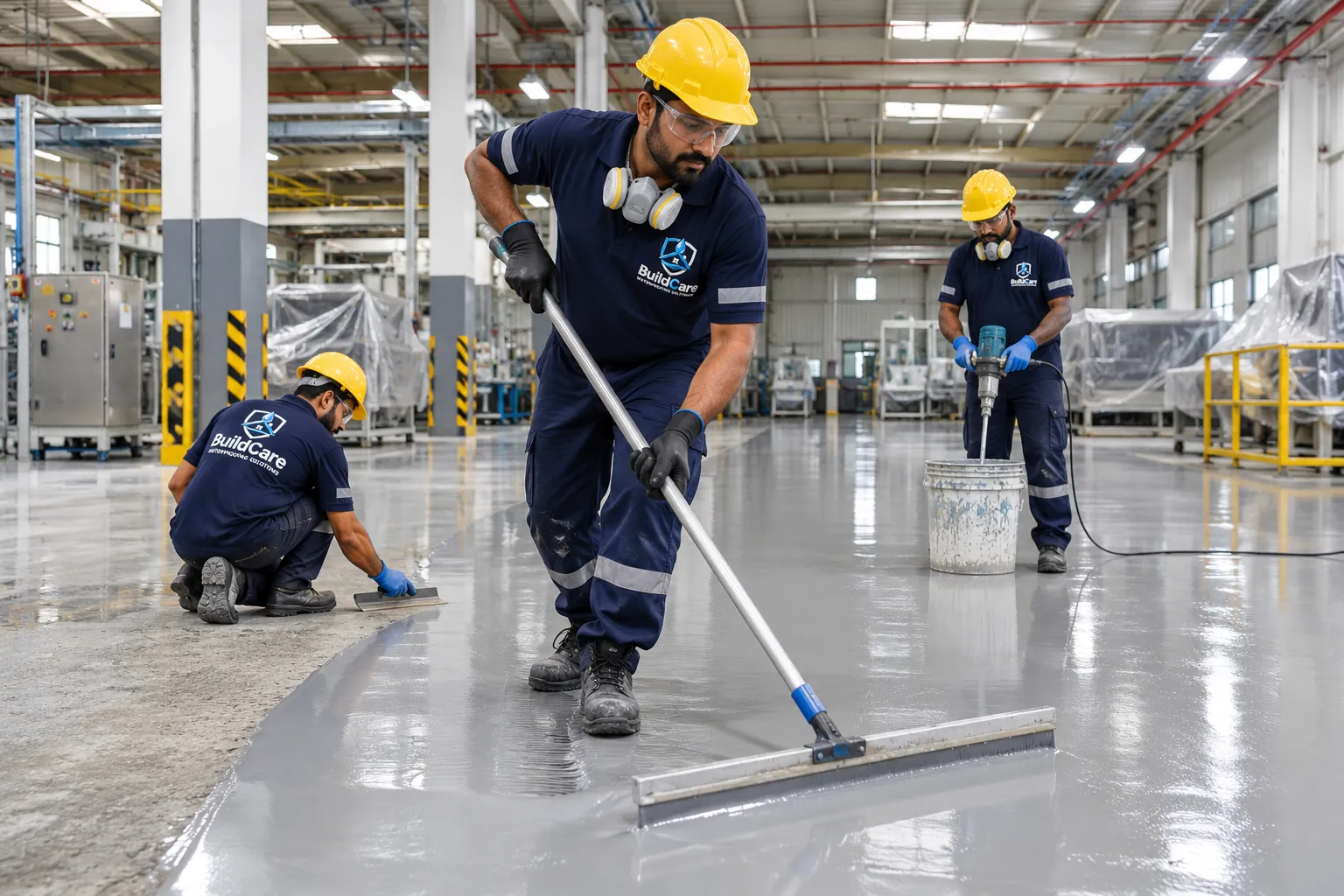
Industrial floors may be exposed to machinery, regular movement, spills, cleaning routines and demanding operating conditions. Buildcare assesses the concrete substrate and intended use before recommending an epoxy flooring build-up. The specification should account for traffic, impact, chemical exposure, slip requirements, maintenance and the condition of the existing slab.
About Industrial Epoxy Flooring
The practicalities of the environment, such as equipment walkways spillages, cleaning regimes and high-duty operating conditions can all have an impact on the performance of the flooring. Buildcare will inspect the concrete base and determine the end-use environment before putting together the epoxy flooring build-up. The specification should include the levels of traffic, impact, and chemical resistance, slip resistance, maintenance schedule and the existing condition of the slab.
The performance of epoxy flooring isn't solely based on the coating product. Factors like surface prep, strength of concrete, moisture condition, application condition, system thickness and curing all affect the outcome. The scope of approved project will indicate the planned build-up and service conditions.
Common floor problems and requirements
- Concrete dusting and surface wear
- Staining from oils or process materials
- Floor finish deterioration in traffic lanes
- Uneven or damaged surface areas
- Cleaning difficulties in operational zones
Site conditions and selection factors
- Mechanical wear and traffic loads
- Oil, grease or chemical exposure
- Concrete strength and surface profile
- Moisture and existing coating condition
- Operational shutdown and curing windows
Preparation and epoxy system options
Potential elements of a project specification may include:
- Mechanical surface prep and removal of failed material.
- Concrete repairs and compatible primer
- Epoxy coating or a higher-build system per traffic level.
- Finish withTexture final where slip control is needed.
- System-specific topcoat where exposure demands it
The final system should then be chosen, based on the product manufacturers' data and real conditions on the site. Moisture, delaminated concrete dirt movement joints and conditions, which are not suitable for the application can influence adhesion and service performance. Do not issue promises for chemical resistance, load bearing capacity, slip resistance or thickness.
Work process
- Discussion of requirementsknow the location and use of the property, and restriction of traffic and operations.
- Site inspectionevaluate the condition of the concrete, including cracks, moisture levels contamination existing coatings, and accessibility.
- System recommendationdefine prep primer coating layer, finish, and performance required.
- Quotation and planningconfirm area, scope, exclusions, shutdown, or access requirements and curing time.
- Surface preparation and applicationcomplete the work as agreed to the prescribed system.
- Curing and handoverleave the area under pressure until the timescale specified and give appropriate maintenance instructions.
Benefits and advantages
- A continuous coated finish for suitable prepared floors
- A choice of system and finish based on the intended use
- Potentially easier routine cleaning than untreated concrete
- Options for selected traffic and service conditions when properly specified
- A defined preparation and application process
Applications and suitable areas
- Manufacturing and assembly areas
- Workshops and maintenance bays
- Production support rooms
- Utility and service areas
- Selected industrial storage spaces
Frequently Asked Questions
What is industrial epoxy flooring used for?
m had a protected floor installed in certain factory areas to achieve a consistent surface that would be resilient to the site's traffic and cleaning regime.
Is industrial epoxy flooring heavy duty?
Performance will be based on the system specified thickness substrate profile and the service environment. The term heavy duty should be referenced to a specific specification.
Can epoxy flooring withstand machinery?
Flooring system the type of flooring system should be chosen based on the type of machinery, general loads and the anticipated impact and movement. Some epoxy coating systems aren't made for this.
Is epoxy suitable for chemical exposure?
Chemical resistance is specific to each resin system and chemical. Consultant with chemical resistance list for specific chemical concentration temperature and time of contact.
Can epoxy be applied over old paint?
Existing coatings should be tested for adhesion and compatibility. The coating should be removed if unsuitable or inadequate.
How is an industrial floor prepared?
The cleaning process may be to remove contaminants, grinding, or mechanical abrasion, removing the contaminants, crack filling, checking the surface to prepare the surface of substrate before application of primer.
Can work be done in stages?
The phased installation might be feasible provided that site arrangements and operating procedures can provide clearance between the work areas and sufficient curing period.
How do I request an industrial epoxy flooring quote?
Provide the site location, estimated floor space, reference the existing floor condition, reference use and potential traffic/chemical exposure. Site inspection may be necessary.
Related Services
Discuss Your Industrial Epoxy Flooring Requirements
Tell Buildcare about your property, the affected area and your requirements to arrange the next step.