Bathroom Waterproofing Services
Bathroom Waterproofing for Better Building Protection
Bathroom waterproofing is a system of flooring, wall, and junction treatments, which minimise the extent of water entry between adjoining rooms and into building elements. Bathrooms are subject to regular wetting from showers washing plumbing connections and mopping.
Trust & Credibility
Buildcare has 10+ years of experience and 300+ completed projects. The team focuses on understanding site conditions, identifying relevant water-entry points and selecting an appropriate treatment approach.
- 10+ years of experience
- 300+ completed projects
- Assessment-led recommendations
- Solutions considered for different building requirements
About Bathroom Waterproofing
Bathroom waterproofing Bathroom waterproofing involves a series of treatments designed to prevent water from penetrating floors, walls, and important junctions to adjacent rooms and components. With showers, taps, floor, washes, and pipework, bathrooms are constantly exposed to water, so waterproofing must be complemented with correct drainage, suitable tiling, and clean finishes, around, outlets, and pipework.
Choice of system Based on substrate, moisture condition exposure movement drainage existing finishes and access. Inspection and preparation are key components of a compatible approach.
Common Problems & Warning Signs
- This can be a sign that the area should be examined. Other conditions may cause the same symptoms so this should be looked at.
- Leaking ceilings beneath bathrooms
- Water seeping from the walls near a shower area.
- Water leaks from around, pipe, sleeves, or floor drain traps.
- Loose or hollow-sounding tiles
- Moisture or peeling paint outside of the bathroom over a long period of time.
Causes & Risk Factors
Water penetration can develop from construction details, ageing materials, environmental exposure and maintenance issues. Common causes include:
- Missing, damaged or poorly installed waterproofing layer
- Inadequate detailing at floor-wall junctions
- Failed seals around pipes and sanitary fittings
- Cracks in screed, substrate or grout
- Incorrect floor slope or drainage issues
Methods & Technical Solutions
- What comes next industry methods can be considered where Technical merit exists these need to be tested to site conditions and product data. This is not an endorsement that Buildcare supplies the whole range.
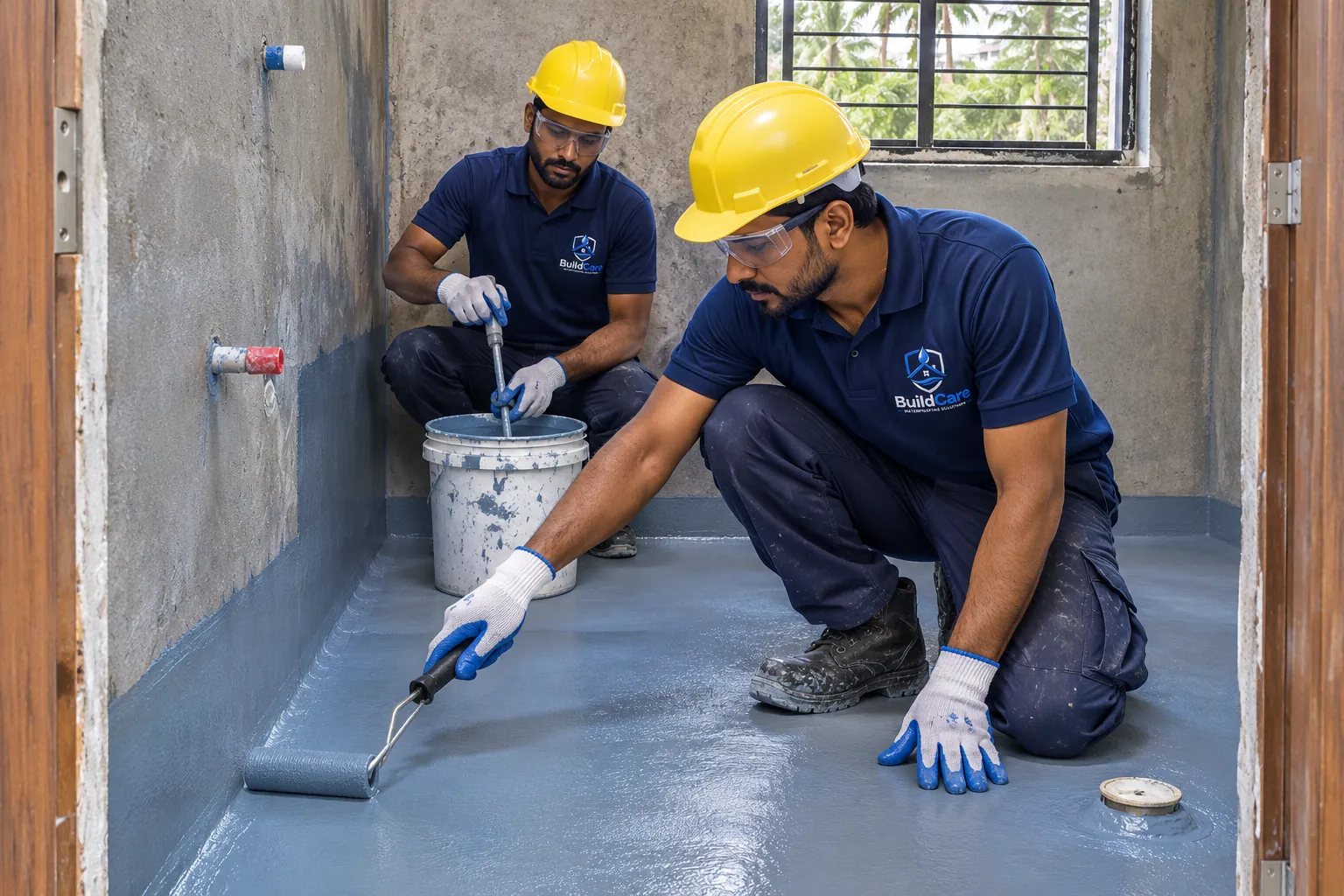
- Cementitious waterproofingtypically appropriate for bathroom floors and walls and would be applied over the correct surface.
- Liquid-applied membranecreates an all one piece coating when used with recommended thickness and reinforcement.
- Flexible corner and joint treatmenttapes, collars, or other compatible sealants could be applied at key transitions.
- Service penetration sealadequate collars or sealing systems installed around the penetrations of pipes.
- Drain and threshold detailingthe waterproofing system shall include: • floor traps; • door thresholds; and • wet-area transitions.
Our Work Process
A structured workflow helps match the selected treatment to the site condition.
- Initial inspection review the affected area and visible symptoms.
- Assessment identify likely water paths, substrate condition and vulnerable details.
- System selection determine an appropriate treatment based on exposure and compatibility.
- Surface preparation clean and prepare the substrate and carry out required repairs.
- Application install the selected system according to technical instructions.
- Review inspect the completed work and conduct appropriate checks where specified.
Benefits & Advantages
When correctly specified, installed and maintained, a suitable system can help manage water penetration and protect treated building elements.
- Helps reduce water seepage into adjoining spaces
- Protects ceilings and walls below wet areas
- Supports durability of bathroom finishes
- Helps manage moisture around critical junctions
- Forms part of a properly detailed wet-area installation
Applications & Suitable Areas
- New residential bathrooms
- Apartment bathrooms and ensuite areas
- Commercial washrooms
- Shower cubicles and wet rooms
- Bathroom renovation and remedial work
Frequently Asked Questions
.Why is bathroom waterproofing important?
Constrains water ingress from wet-area floors and walls into other construction members.
Should a bathroom be waterproofed before tiling?
The general practice is that the waterproofing system is pre-installed and tested before the tiling work as the system specification.
Can bathroom leakage be repaired without removing tiles?
There are some instances where remedial options are limited, but you need to determine the right remedial action based on where the leak is and how to reach the failed layer.
Which areas need bathroom waterproofing?
Floors, shower zones, wall-floor junctions, openings, and penetrations and specified wet areas.
Does tile grout make a bathroom waterproof?
No. The grout and tiles are completed; they're not a replacement for a waterproofing system that has been applied.
How long should waterproofing cure before tiling?
Hardening and testing times vary based on the chosen product and manufacturer's guidelines.
Can waterproofing stop leakage to the floor below?
It can be useful to check if the bathroom waterproofing membrane is the cause of the leak. Defects in plumbing should be inspected on their own.
How can bathroom waterproofing be maintained?
Keep seals in good condition, mend broken grout and fittings, do not harm the membrane when renovating, repair leakages immediately.
Related Services
Discuss Your Bathroom Waterproofing Requirements
Need help with bathroom waterproofing? Contact Buildcare to discuss the affected area, understand possible treatment options and arrange the next step. The recommended system and scope depend on the site assessment.