
Damp Proofing Treatment Services
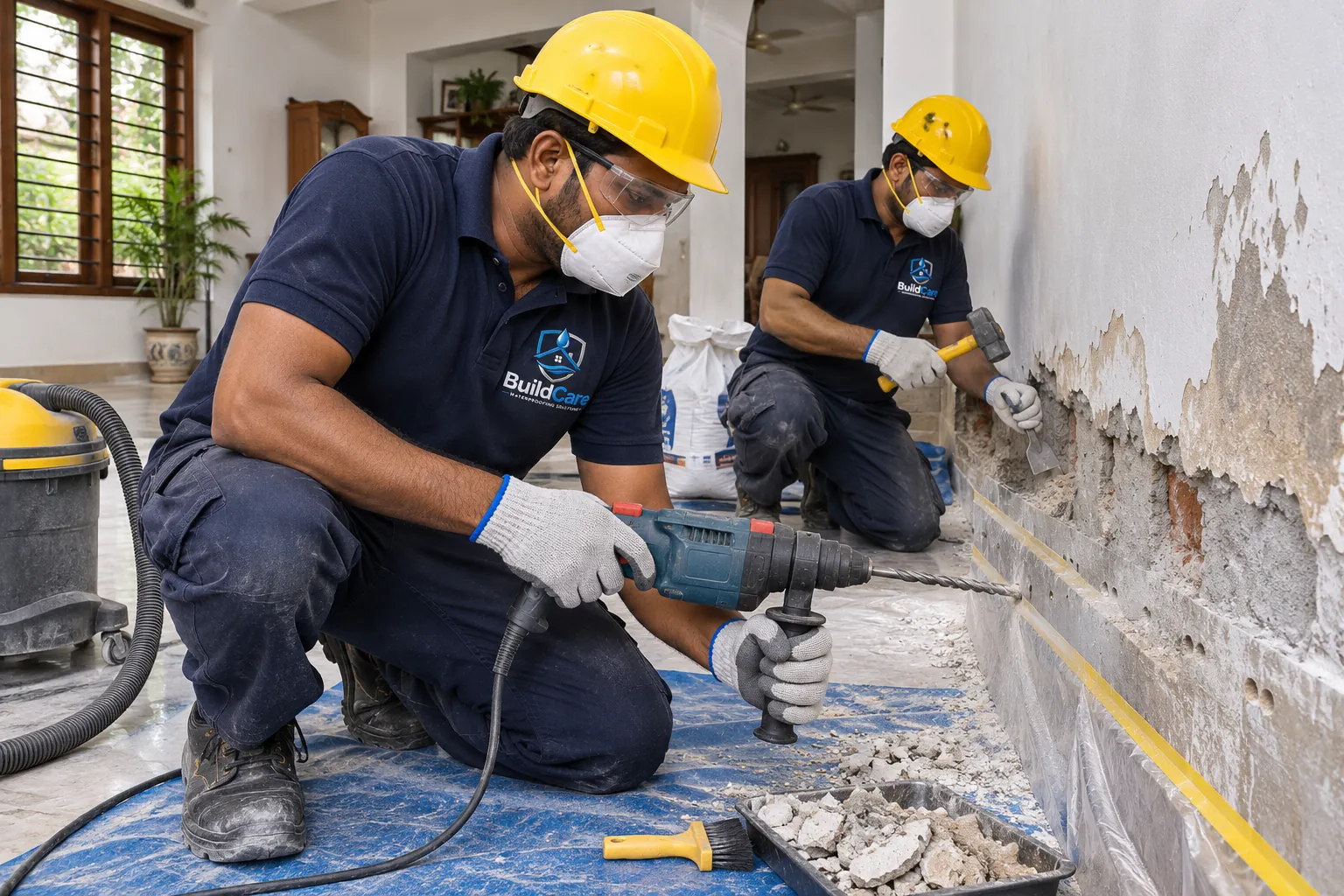
Damp Proofing Treatment for Better Building Protection
Damp proofing refers to different measures to prevent the passage of moisture into building materials. Moisture can originate from the ground, water ingress from the rain, leaks in the plumbing system, condensation, and in some cases moisture transfer from adjacent areas. The method of treatment depends on the source of moisture.
Trust & Credibility
Buildcare has 10+ years of experience and 300+ completed projects. The approach begins with understanding the symptoms and likely source before recommending a repair. The actual scope and materials should be confirmed for each site.
- 10+ years of experience
- 300+ completed projects
- Assessment-led recommendations
- Attention to repair preparation and detailing
About Damp Proofing Treatment
Damp proofing is a range of practices designed to restrict the movement of moisture into building materials. It may come from the moisture in the ground, ingress of rain water, broken pipes, condensation, or water passing between rooms. The correct treatment depends on the mechanism of the moisture. An overlay can mask the symptoms.
A visible damp patch does not necessarily pinpoint the ingress point. Water can run down slabs, in joints or behind finishes and surfaces before appearing inside. The assessment should look at connected spaces and other potential sources like drains and plumbing.
Common Problems & Warning Signs
The following symptoms may indicate a need for further inspection. Similar symptoms can have more than one cause, so the source should be confirmed before treatment.
- Persistent damp patches near the base of walls
- Peeling paint and powdery plaster
- White salt deposits on masonry
- Musty odour or mould in poorly ventilated areas
- Dampness that returns after surface repairs
Causes & Risk Factors
Common causes relevant to this service include:
- Capillary rise of ground moisture through porous materials
- Rain penetration through walls and openings
- Leaking plumbing or drainage services
- Moisture transfer from bathrooms and wet areas
- Condensation caused by humid air and cold surfaces
Methods & Technical Solutions
These methods are used in industry for chosen repair conditions. They are not interchangeable and a suitability assessment can only be obtained by determining the substrate moisture movement, water pressure and repair goal. This list is not intended to confirm Buildcare has all of the mentioned products or systems.
- Damp-source evaluation Check wall location, flood stage, rains impacts, drain, and airflow to come to a decision rising dampness from additional dampness sources.
- Measures for damp-proof course Where rising dampness is identified, damp-proofing measures that are appropriate for wall construction and access may be explored.
- Exterior water-entry control Repair cracks, joints, roof, edges, and façade detail, where in the walls is detected an ingress of water.
- Plumbing and drainage correction repair of leaks and water discharge before decorative or remedial wall finishes can be applied.
- Finish and plaster work Existing detrimental finishes should be stripped back, prepared, and replaced with compatible finishes, once the source of the moisture has been removed.
Benefits & Advantages
A suitable repair, correctly specified and executed, can help manage the identified leakage path and protect affected building elements.
- Addresses moisture causes rather than relying only on decorative coatings
- Helps reduce recurring damage to plaster and paint
- Can improve the condition of affected interior spaces
- Supports a more suitable treatment choice for different damp mechanisms
- Encourages early identification of plumbing and building defects
Applications & Suitable Areas
This service may be relevant to the following building types and areas, subject to inspection and access:
- Ground-floor walls
- Older masonry buildings
- Basement and below-ground spaces
- Walls adjoining wet areas
- Internal and external walls affected by moisture
Frequently Asked Questions
What is damp proofing?
Damp proofing refers to measures that limit moisture movement into building materials and interior spaces.
What is rising damp?
It is moisture moving upward through porous masonry from the ground by capillary action.
How can I tell rising damp from a plumbing leak?
The pattern, height, location and relationship to services can provide clues, but inspection and sometimes testing are needed.
Can waterproof paint solve damp walls?
A surface coating alone may not resolve ground moisture, plumbing leaks or rain penetration.
What is a damp-proof course?
It is a barrier or treatment intended to interrupt moisture movement through a wall at a defined level.
Does condensation cause damp patches?
Yes. Condensation can occur when humid air contacts cooler surfaces, especially where ventilation is limited.
Should salt-contaminated plaster be replaced?
Where salts and moisture have damaged plaster, removal and reinstatement may be required after the moisture source is controlled.
How long does damp proofing take to show results?
The time varies with wall thickness, moisture level, weather, ventilation and the selected treatment. Drying can take time after the source is controlled.
Related Services
Discuss Your Damp Proofing Treatment Requirements
Experiencing damp proofing treatment concerns? Contact Buildcare to discuss the affected area and arrange the next step. The recommended treatment will depend on the findings of the site assessment.