Epoxy Floor Coating for Prepared Concrete Surfaces
Epoxy Floor Coating for Prepared Concrete Surfaces
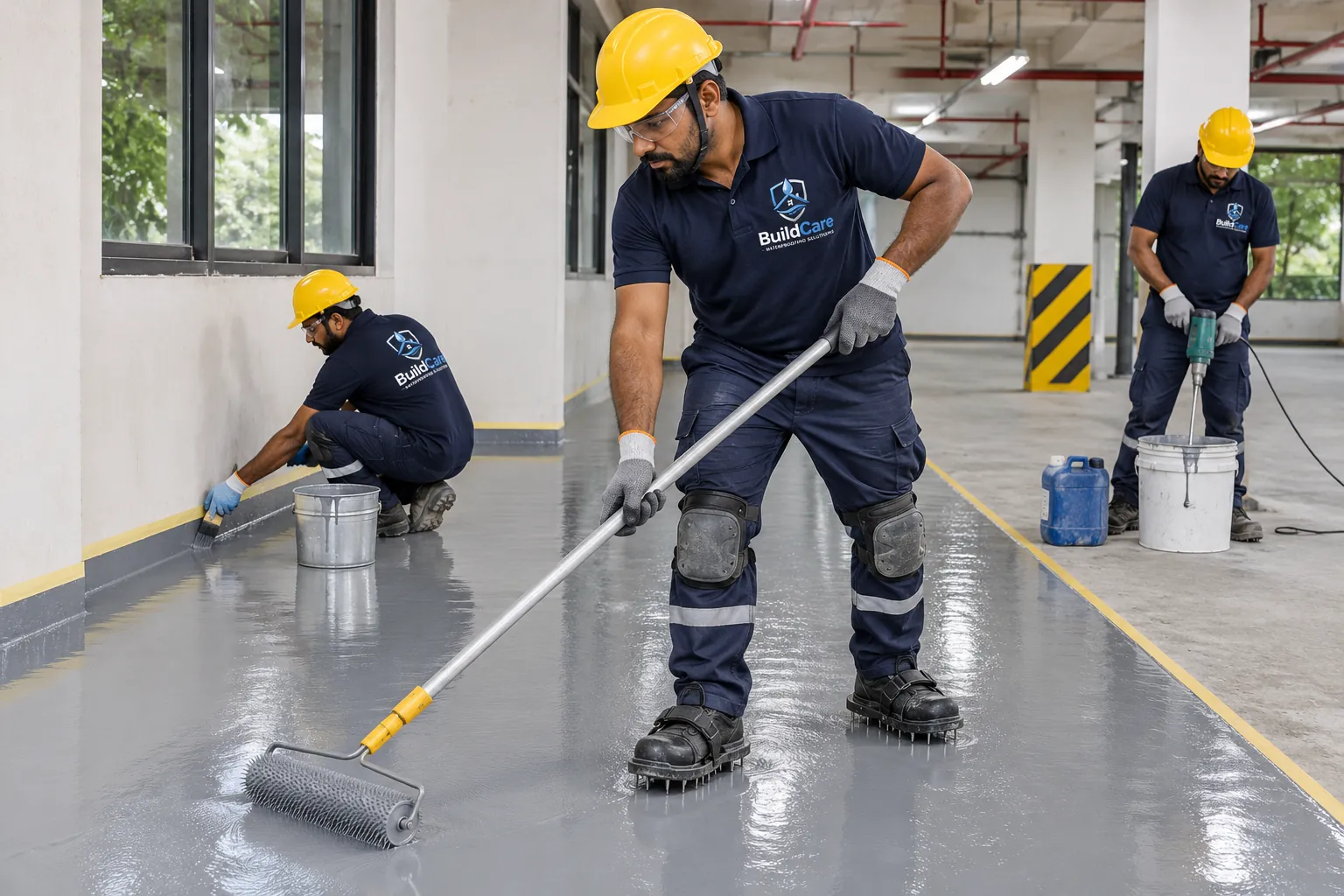
Epoxy floor coating an epoxy floor coating is applied to a prepared surface to give a seamless, protective, and finished floor coating. Epoxy coating is suitable for the concrete condition, moisture content, contamination of the surface and what the floor needs to do. Buildcare determines this first before advising on coating, preparation, and finish.
About Epoxy Floor Coating
Once a suitable surface has been prepared, the floor is coated with an epoxy coating providing a protective and decorative floor finish. Epoxy coating is suitable for use in many circumstances according to the condition of the concrete, and the expected wear, surface contamination and moisture conditions. Buildcare will evaluate the coating requirements before specifying the type of coating, prep, and finish.
It is not merely the coating product itself, which determines the performance of epoxy flooring. Results are affected by surface preparation, concrete quality, moisture, and curing conditions, build-up thickness and build-up conditions. The proposed build-up and end use conditions should be specified in the project scope.
Common floor problems and requirements
- Unsealed concrete that produces dust
- Surface staining and wear
- A need for a continuous coated finish
- Minor surface defects requiring repair before coating
- Existing coating failure requiring assessment
Site conditions and selection factors
- Concrete porosity and surface profile
- Moisture and possible vapour transmission
- Oil, grease, paint or other contaminants
- Cracks and movement joints
- Required coating thickness and service conditions
Preparation and epoxy system options
Potential elements of a project specification are:
- Surface grinding or other preparation as specified
- Cleaning and removal of contaminants
- Crack and surface repair as deemed fit
- Primer and epoxy coating application
- Curing and final inspection based on product requirements.
The assembled system has to be matched with the product manufacturer's technical data and the ground reality of the site. Moisture, bad concrete contamination expansion joints, and poor application conditions can influence adhesion and service behavior. Don't assure chemical stability, load capacity, slip resistance or thickness without a corresponding specification.
Work process
- Discussion on requirement:- Gather information on floor area, nature of the property, traffic, and operational restrictions.
- Site inspectionexamine the condition of the concrete, look for cracks moisture presence of contamination, present coatings, and general access.
- System recommendationfrom define preparation primer coating layers, finish, and indicate relevant performance requirements.
- Quotation and planningagree area, scope, exclusions, shutdown, or access requirements and time before opening/after operations.
- Surface prep and applicationcomplete the agreed work following the designated product system.
- Curing and handing overensure the area remains closed for the duration and furnish the appropriate maintenance instructions.
Benefits and advantages
- A continuous coated finish for suitable prepared floors
- A choice of system and finish based on the intended use
- Potentially easier routine cleaning than untreated concrete
- Options for selected traffic and service conditions when properly specified
- A defined preparation and application process
Applications and suitable areas
- Concrete floors in workshops
- Selected commercial service areas
- Utility rooms
- Storage and back-of-house areas
- Other suitable prepared concrete surfaces
Frequently Asked Questions
What is the difference between epoxy flooring and epoxy floor coating?
Epoxy flooring can be more broadly applied to resin floor system, as epoxy floor coating can be a thinner coating layer. The specification should state the system, thickness.
Can epoxy coating be applied to bare concrete?
It should be determined if the concrete is sound, dry enough and suitable for the product to be used.
Does concrete need grinding before epoxy coating?
Mechanical preparation of the surface profile is required for many systems to ensure an appropriate profile. Mechanical preparation method is determined by the substrate and product specifications.
Can epoxy coating be applied over damp concrete?
Moisture-Emission Rates For each system the slab must be tested or evaluated as needed, and a moisture-control system used if called for.
How many coats are required?
Number of coats the number of coats required will vary based on the product specification, substrate, and performance need. This must be checked in the project scope.
Can damaged concrete be coated directly?
Repair all loose and poorly bonded or damaged areas in a suitable manner and prepare to receive the coating. Ensure that the surface to be coated is sound. Coating onto unsound concrete will cause failure.
How long does epoxy floor coating last?
Service life will depend on the preparation, system quality, traffic, exposure, maintenance, and installation conditions. Don't depend on an arbitrary life without a project specific specification.
Can the coating be repaired if damaged?
Local repairs can sometimes be carried out, but colour and finish matching may vary. How a paint needs to be repaired will depend on its severity and causes.
Related Services
Discuss Your Epoxy Floor Coating Requirements
Tell Buildcare about your property, the affected area and your requirements to arrange the next step.