
High-Rise Building Waterproofing and Seepage Treatment
High-Rise Building Waterproofing and Seepage Treatment
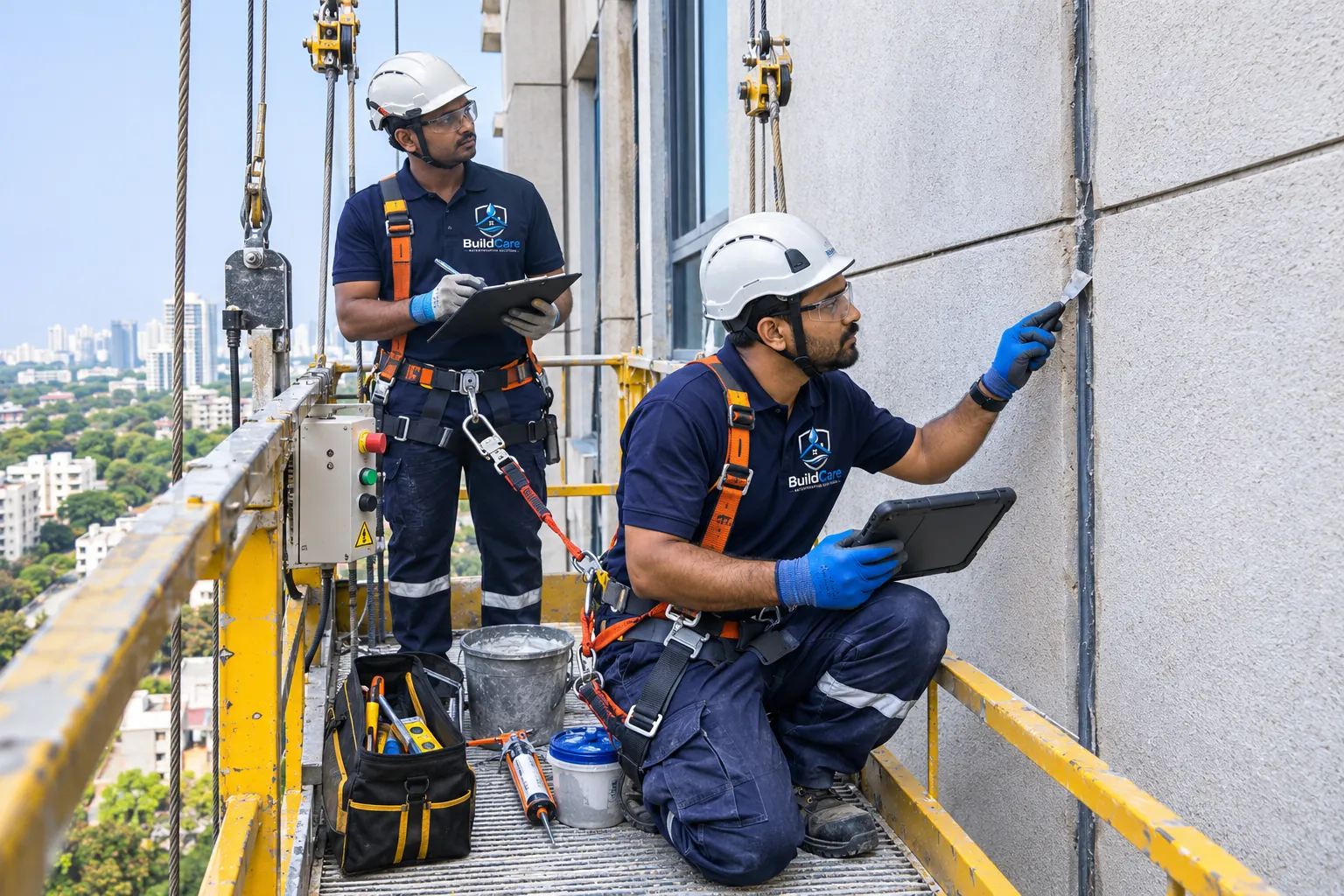
High rise building types may include leakage at the terraces, roof slabs, external walls balcony service shafts and construction joints. Buildcare examines the site, building information and access considerations to make recommendations. Work at height and access to occupied areas require planning, appropriate permissions, safety provisions and liaison with building management.
About High-Rise Building Waterproofing
High-rise buildings can develop leakage at terraces, roof slabs, external walls, balconies, service shafts and construction joints. Buildcare assesses the affected location, building details and access requirements before proposing a treatment. Work at height and access to occupied areas require suitable permissions, safety arrangements and coordination with building management.
The objective is to understand where water is entering, what building detail is allowing it and what repair or waterproofing approach is compatible with the site. The final scope should state the treatment area, preparation requirements, access arrangements and any operational restrictions.
Common problems and warning signs
- Top-floor ceiling leakage during rainfall
- External wall dampness or recurring paint damage
- Seepage near windows, balconies or façade joints
- Water stains around service shafts
- Leakage in podiums or shared amenity areas
Causes and risk factors
- Ageing terrace waterproofing
- Cracks and movement at structural or construction joints
- Failed sealant around windows and façade interfaces
- Poor drainage at balconies and roof outlets
- Water entry through service penetrations
Methods and technical solutions
The following are possible assessment or treatment options, not a promise that every method is offered or suitable for every project:
- Terrace and roof slab waterproofing based on substrate condition
- External wall and façade joint assessment
- Compatible sealant replacement at identified interfaces
- Crack repair and injection grouting where appropriate
- Balcony, podium and drainage-detail treatment
- Final material selection must follow a site assessment and product-system compatibility review. Existing coatings, substrate moisture, movement, weather exposure, traffic and access can affect the recommendation.
Benefits and advantages
- A site-specific approach instead of a one-method-fits-all recommendation
- Attention to likely water-entry points, joints and drainage details
- Planning around building use, access and operational needs
- A defined scope that helps property teams understand the work
- Practical maintenance guidance for the treated area
Applications and suitable areas
- Residential apartment towers
- Commercial high-rise buildings
- Mixed-use developments
- Podiums and shared amenity decks
- Terraces, balconies and service shafts
Why choose Buildcare
- Inspection-led discussion of the leakage or waterproofing concern
- Recommendations based on the structure and site conditions
- Clear communication of the proposed work scope
- Consideration of access, safety and building operations
- Support for related waterproofing requirements across the property
- Publish only verified company experience, project counts, testimonials, certifications and warranty terms. Do not imply that a specific industrial or commercial system is certified unless documentary evidence is available.
Frequently Asked Questions
Which areas of a high-rise building commonly need waterproofing?
Common areas for assessment include terraces, roof slabs, external walls, balconies, podiums, service shafts and joints.
Can external wall seepage be treated from inside?
Internal treatment may not address the external water-entry point. The source and access options should be assessed before deciding the method.
Do you handle terrace leakage in apartment towers?
Terrace and roof leakage can be inspected, including drainage, cracks, joints and existing waterproofing condition.
Is special access required for external wall work?
Depending on building height and façade layout, suitable access equipment, permissions and safety arrangements may be required.
Can waterproofing be done in an occupied apartment building?
Work can sometimes be phased with residents and building management. Access, noise, safety and curing requirements affect scheduling.
Can leakage between floors be diagnosed?
The affected area and likely water paths should be inspected. Plumbing leaks and waterproofing failures may require different investigations.
Who should coordinate a high-rise waterproofing project?
Building management or the authorised representative should coordinate access, resident communication, permissions and work areas.
How is the quotation prepared for a high-rise project?
The quotation depends on the affected areas, height and access, substrate condition, preparation and selected system.
Related Services
Discuss Your High-Rise Building Waterproofing Requirements
Tell Buildcare about your property, the affected area and your requirements to arrange the next step.