Industrial Waterproofing Solutions for Buildings, Roofs and Facilities
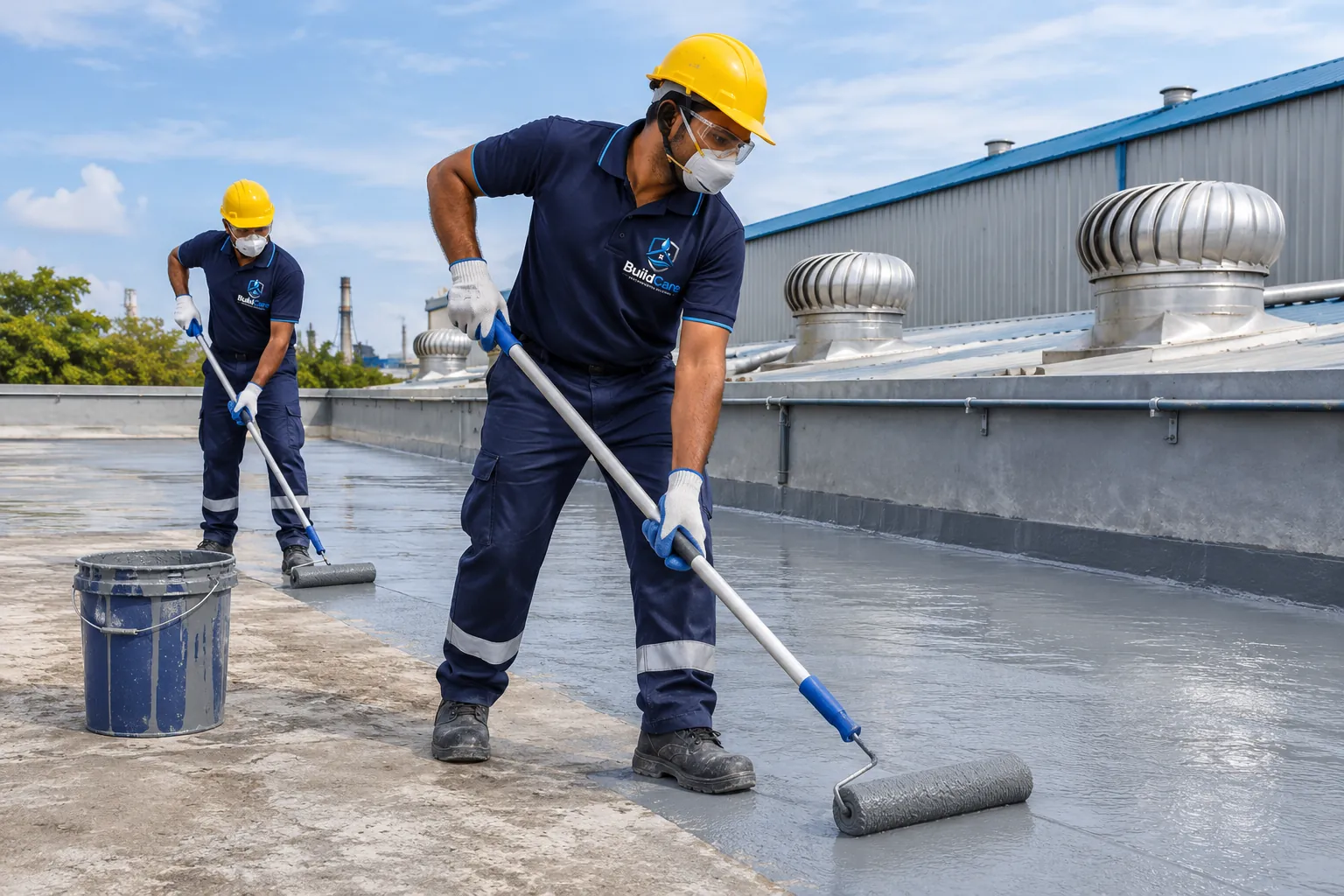
Industrial Waterproofing Solutions for Buildings, Roofs and Facilities
Buildcare offers industrial waterproofing support for facilities affected by roof leakage, water ingress, dampness, and moisture-related deterioration. Each project should begin with an inspection of the affected area, substrate condition, water entry points and operating requirements. The suitable treatment is then selected for the site rather than applying one method to every industrial building.
About Industrial Waterproofing
Buildcare brings industrial waterproofing support for facilities affected by roof leakage, water ingress, dampness, and moisture-related deterioration. Each project should begin with an inspection of the affected area, substrate condition, water entry points and operating requirements. The suitable treatment is then selected for the site rather than applying one method to every industrial building.
The aim is to find out where water is entering, what building detail is causing it and what form of repair or waterproofing will suit the location. The ultimate scope will define the treatment zone, pre-treatment needs, access requirements and any operational restrictions.
Common problems and warning signs
- Water dripping from a factory or plant roof during rain
- Damp patches on walls, ceilings or service areas
- Water entering through construction joints or cracks
- Ponding water on roof slabs or exposed decks
- Peeling paint, damaged finishes or recurring moisture marks
Causes and risk factors
- Ageing or damaged roof waterproofing
- Cracks, open joints and poorly sealed penetrations
- Blocked or undersized rainwater outlets
- Movement at joints and interfaces
- Incorrect slope or persistent water ponding
Methods and technical solutions
These assessment and/or treatment options are suggestions, and do not mean that every method is available, appropriate, or suitable for every project.
- Roof and deck membrane systems, which can be part of the substrate system if compatible.
- Cementitious waterproofing for appropriate concrete areas
- Sealing joints and cracks with a compatible repair material.
- Injection grouting where inspection identifies a suitable water path through concrete.
- Drainage and outlet corrections where ponding contributes to leakage.
Recommended material choice should be confirmed only after a site assessment and product-system compatibility evaluation. Existing coatings, substrate moisture movement weather exposure, traffic, and access can influence the recommendation.
Benefits and advantages
- A site-specific approach instead of a one-method-fits-all recommendation
- Attention to likely water-entry points, joints and drainage details
- Planning around building use, access and operational needs
- A defined scope that helps property teams understand the work
- Practical maintenance guidance for the treated area
Applications and suitable areas
- Factory roofs and industrial sheds
- Production and utility buildings
- Plant rooms and service areas
- Concrete terraces and exposed decks
- Retaining walls and selected below-ground areas
Frequently Asked Questions
Which areas of an industrial building can be waterproofed?
Treatment of roofs terraces concrete decks walls service yards, and certain below grade structures can be performed if appropriate for the site conditions.
Can industrial roof leakage be repaired without stopping operations?
Operations may be organized into stages, but access safety time to cure and the style of treatment dictate how operations move forward.
How do you identify the source of industrial building leakage?
Examination looks at damp in affected areas cracks junctions drainage roof features and likely water routes. Additional testing could be suggested where the cause is uncertain.
Which waterproofing system is suitable for a factory roof?
The appropriate system – depends on the roof material slope condition exposure drainage and anticipated use. The assessment site has to be established before choosing the system.
Can cracks in concrete structures be treated?
Cracks can be ascertained and repaired with suitable technique. Treatment is dependent on the width, movement, and depth of the crack and if water has been actively passing through it.
Do you provide waterproofing for industrial sheds?
Industrial shed roof can be checked to see the leakage points of shed roofs and better solutions for repairing/ waterproofing.
How long does industrial waterproofing take?
Length of time dependent on the area being treated, primer and/or admixture used, weather conditions and curing considerations. A proposed timetable can be discussed following the inspection.
Is a site inspection necessary before quotation?
Yes. An inspection will determine the areas involved, access requirements and possible scope of work.
Related Services
Discuss Your Industrial Waterproofing Requirements
Tell Buildcare about your property, the affected area and your requirements to arrange the next step.