
Injection Grouting Services
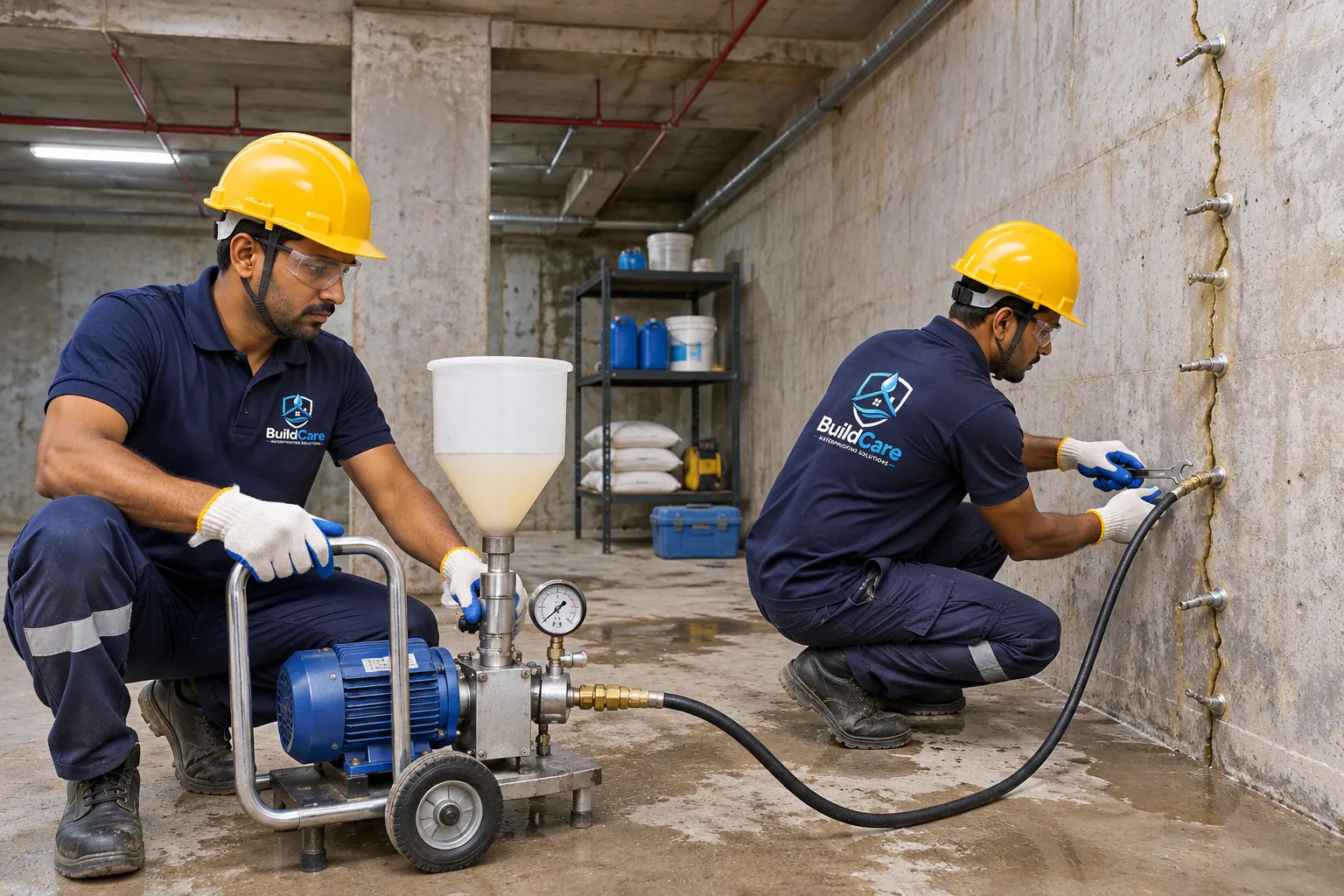
Injection Grouting for Better Building Protection
Injection grouting is a method of repair whereby the material can be more exactly pumped through ports and packers into cracks, voids, and joints under pressure with a grout or resin material. It can be applied to control water ingress, to fill dry voids or to re-establish continuity of cracking under very specific situations. The grout type and injection system have to be matched to the site.
Trust & Credibility
Buildcare has 10+ years of experience and 300+ completed projects. The approach begins with understanding the symptoms and likely source before recommending a repair. The actual scope and materials should be confirmed for each site.
- 10+ years of experience
- 300+ completed projects
- Assessment-led recommendations
- Attention to repair preparation and detailing
About Injection Grouting
Injection grouting is a repair method where a grout or resin is injected under controlled pressure through ports or packers into cracks, voids, and joints. It can be used to control water ingress, fill voids or provide structural continuity in specified circumstances. The injection material and method should be chosen based on the crack, water flow, substrate, and desired result.
A damp patch, which shows may not necessarily be the ingress point. Water can track along slabs, joints, and behind finishes before emerging indoors. Building diagnosis should take into account other areas and sources of water, like plumbing and drainage.
Common Problems & Warning Signs
The following symptoms may indicate a need for further inspection. Similar symptoms can have more than one cause, so the source should be confirmed before treatment.
- Active water seepage through concrete cracks
- Leakage at construction or cold joints
- Water entering through tie holes or local voids
- Recurring leaks after superficial sealing
- Dampness around below-ground concrete structures
Causes & Risk Factors
Common causes relevant to this service include:
- Cracks in concrete elements
- Honeycombing or voids in concrete
- Defective construction joints
- Water paths around penetrations
- Deteriorated joint or previous repair material
Methods & Technical Solutions
What comes next approaches are used in industry for certain repair conditions. These techniques are not interchangeable, and appropriateness depends on the substrate water movement, water pressure and the aim of the repair. This list is not intended to confirm that Buildcare offers all of the products or systems listed.
- Polyurethane resin injection Certain PU resins can expand and react with moisture, to provide a positive seal on some water feeding cracks or joints. The choice of product is dictated by flow and site conditions.
- Epoxy resin injection Epoxy could be placed into certain dry or adequately controlled concrete cracks wherever bond and crack restoration is essential.
- Cementitious grout injection where the particle size and flow characteristics are correct, cement based grouts could be used in some void filling or consolidating situations.
- Acrylic or gel injection for some specialised applications (subject to design), lower-viscosity gel systems can be considered for use in fine cracks or curtain grouting.
- Packers and injection process Drilling pattern, packer spacing pressure order and volume should be as the repair specification and controlled during works.
Benefits & Advantages
A suitable repair, correctly specified and executed, can help manage the identified leakage path and protect affected building elements.
- Can treat selected water paths that are difficult to access from the surface
- Allows targeted repair through injection ports
- Can help control active leakage in suitable conditions
- May fill voids or restore continuity depending on grout type
- Can reduce the need for extensive surface removal in some applications
Applications & Suitable Areas
This service may be relevant to the following building types and areas, subject to inspection and access:
- Basement concrete walls and joints
- Retaining walls and below-ground structures
- Concrete water tanks
- Selected roof and slab cracks
- Construction joints and defined concrete voids
Why Choose Buildcare
- Buildcare combines 10+ years of experience with 300+ completed projects. The focus is on understanding the source, explaining the proposed scope and selecting a repair approach appropriate to the affected element.
- Experience across waterproofing projects
- Inspection before repair recommendations
- Attention to substrate preparation and details
- Clear explanation of proposed work
- Treatment approach based on site conditions
Frequently Asked Questions
What is injection grouting?
It is a technique that introduces grout or resin through ports into cracks, joints or voids under controlled conditions.
Is injection grouting the same as waterproof coating?
No. Injection is a targeted repair technique, while coatings and membranes protect prepared surfaces.
Which is better, PU or epoxy injection?
They serve different purposes. PU may be used for selected water-bearing leaks, while epoxy may suit certain stable cracks where bonding is required.
Can injection stop an active leak?
It may control selected active leaks, but success depends on the leak path, water pressure, material and execution.
Does every concrete crack need injection?
No. Many surface cracks require other repairs, and some cracks need structural assessment before treatment.
Can grouting be used in water tanks?
Selected tank cracks and joints may be treated with compatible materials, with potable-water suitability considered where relevant.
How long does injection grouting take?
Duration depends on the number of injection points, access, water flow, grout type and curing or reaction time.
Will injection grouting solve the cause of structural movement?
No. Injection may treat a crack or water path, but ongoing movement or structural causes require separate assessment.
Related Services
Discuss Your Injection Grouting Requirements
Experiencing injection grouting concerns? Contact Buildcare to discuss the affected area and arrange the next step. The recommended treatment will depend on the findings of the site assessment.