Roof Waterproofing Services
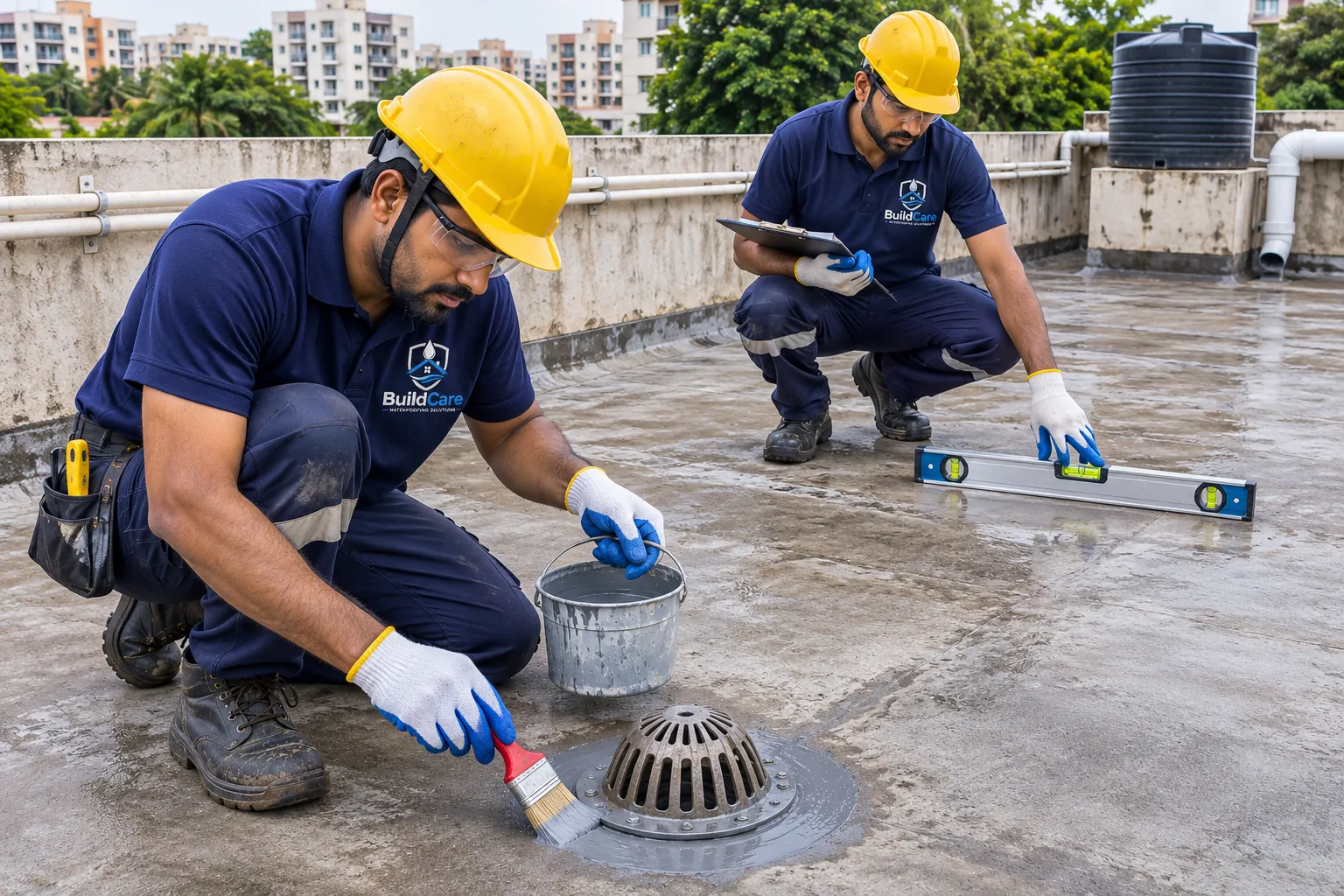
Roof Waterproofing for Better Building Protection
Roof waterproofing is essential for protecting roof surfaces and the overall integrity of the building envelope from the intrusion of rainwater. Beyond heavy sunlight and rain exposure, other circumstances that could impact the roof are standing water, thermal movement, mechanical activity, and roof construction.
Trust & Credibility
Buildcare has 10+ years of experience and 300+ completed projects. The team focuses on understanding site conditions, identifying relevant water-entry points and selecting an appropriate treatment approach.
- 10+ years of experience
- 300+ completed projects
- Assessment-led recommendations
- Solutions considered for different building requirements
About Roof Waterproofing
Roof waterproofing protects the roof surface and the rest of the building envelope from rain water ingress. Roofs are subjected to heavy wind driven rain, falling rain, ponded water, temperature variation and structural movement. The system should take into consideration the construction of the roof, the drainage and the final use of the roof.
System choice is determined by substrate, condition of moisture exposure movement, drainage finishes and access. The inspection and preparation of the surface are integral to the right solution.
Common Problems & Warning Signs
- You may need to look into the area if these symptoms are present. There may be other reasons for the equivalent symptoms.
- Ceiling stains directly under the roof
- Dampness on parapet / roof edges
- Water ponding after rainfall
- Cracked or blistered roof coatings
- Leakage due to leaks around the roof outlets and service penetrations.
Causes & Risk Factors
- Penetrating water may come from the way the building was built, material that has degraded over time, the weather or a problem with maintenance. Typical reasons are:
- Deteriorated or discontinuous roof membrane
- Cracks and movement on the roof junctions
- Inadequate slope or blocked drainage
- Inadequate detailing at pipe and equipment bases
- Critical damage resulting from service activity or subsequent installation work.
Methods & Technical Solutions
The below processes are industry practices that might be used where technically feasible. They should be verified for applicability with site conditions and product data. These are not to be taken as confirmation that Buildcare brings these products.
- Liquid-applied membraneforms a seamless membrane across suitable, prepared roof surfaces with reinforcement at details per specifications.
- Sheet membranepreformed sheets are applied with proper laps, terminations, and detailing tailored to the roof design.
- Poly Urethane coatingflexible liquid membrane, would be considered if required on a compatible roof substrate and exposure.
- Cementitious waterproofingfor use on approved cement-based substrates and in specified roof areas that are within the limitations of the product.
- Detail and joint treatmentroof edges, outlet areas, upstands cracks and penetrations all need to be detailed.
Our Work Process
A structured workflow helps match the selected treatment to the site condition.
- Initial inspection review the affected area and visible symptoms.
- Assessment identify likely water paths, substrate condition and vulnerable details.
- System selection determine an appropriate treatment based on exposure and compatibility.
- Surface preparation clean and prepare the substrate and carry out required repairs.
- Application install the selected system according to technical instructions.
- Review inspect the completed work and conduct appropriate checks where specified.
Benefits & Advantages
When correctly specified, installed and maintained, a suitable system can help manage water penetration and protect treated building elements.
- Helps reduce rainwater ingress through treated roof areas
- Protects interior finishes from roof-related dampness
- Can improve continuity of the roof's water-resisting layer
- Supports maintenance of roof assets
- Addresses vulnerable junctions when detailed correctly
Applications & Suitable Areas
This service may be relevant to the following property types and locations, subject to construction details and site conditions:
- Reinforced concrete roofs
- Residential and apartment rooftops
- Commercial building roofs
- Selected service and utility roof areas
- New roof construction and refurbishment
Frequently Asked Questions
What is roof waterproofing?
This is the instalment or renewal of a protective system designed to prevent water entering a roof.
Is roof waterproofing different from terrace waterproofing?
The terms overlap, but roof waterproofing can encompass a broader spectrum of roof types, details, and exposure conditions.
Why does my roof leak during heavy rain?
Possible causes include membrane failure, blocked drainage cracks, defective joints, or water ingress at penetrations.
Can waterproofing be applied over an old coating?
Only after checking compatibility, moisture, adhesion and the condition of the existing layer. May need to remove the unsound material.
Which membrane is suitable for a concrete roof?
Suitability is dependent on roof use, traffic ponding, substrate condition and product standards.
Should roof cracks be repaired first?
Cracks and construction joints usually must be examined and treated before applying the primary waterproofing.
How can roof leakage be prevented?
Maintain all drainage outlets, control details, repair early damage and provide a correctly designed waterproofing system.
Does Buildcare inspect roof leakage?
Call Buildcare to talk through the symptoms and book a survey of the roof and any potential water entry points.
Related Services
Discuss Your Roof Waterproofing Requirements
Need help with roof waterproofing? Contact Buildcare to discuss the affected area, understand possible treatment options and arrange the next step. The recommended system and scope depend on the site assessment.