
Wall Seepage Treatment Services
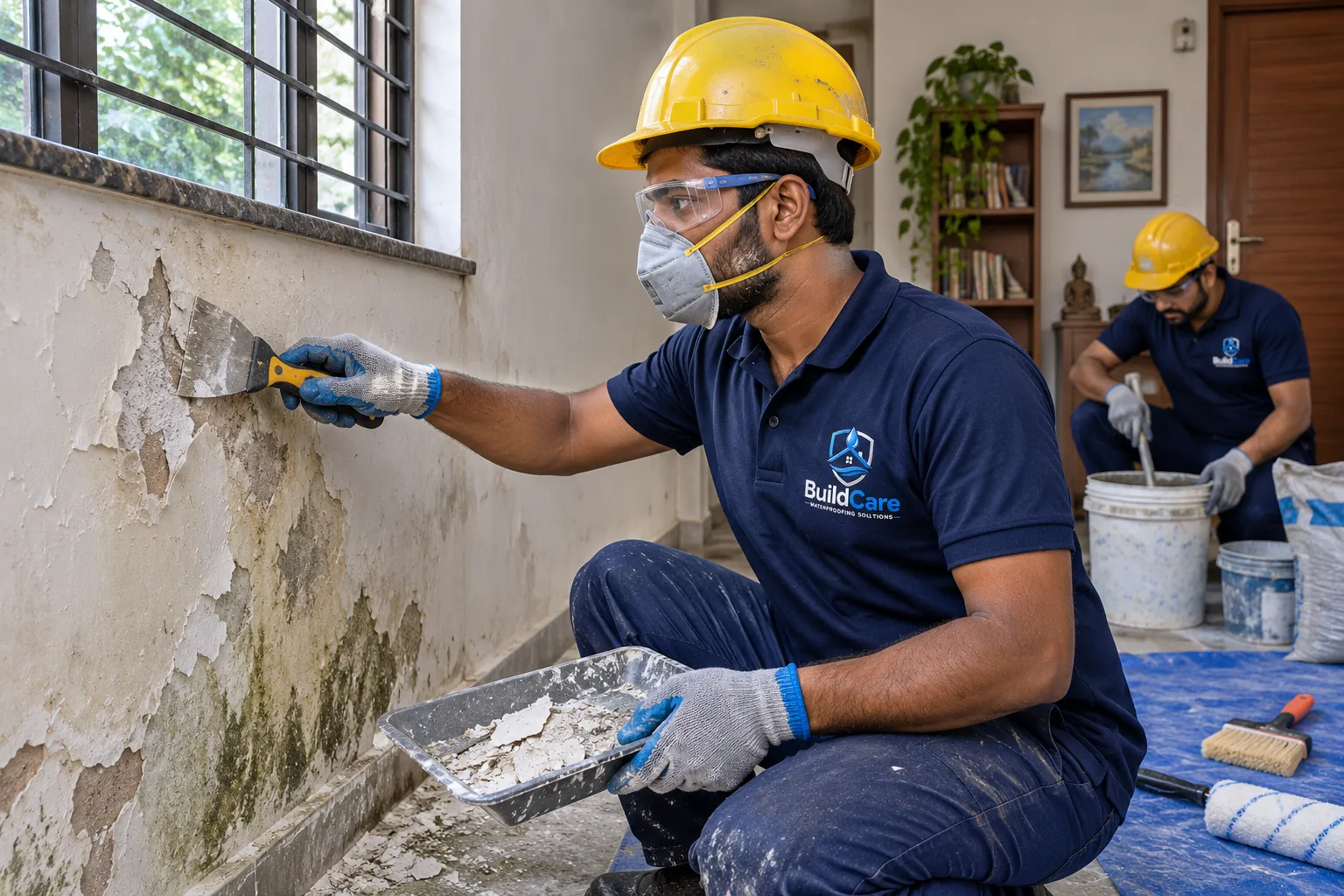
Wall Seepage Treatment for Better Building Protection
Wall seepage treatment the purpose of treatment is to establish the cause of wall leakage or moisture and to resolve that cause. Causes of wall seepage can be rainwater infiltration, plumbing faults, ground seepage, adjacent damp areas or defective construction joints. Permanent repair relies on understanding the cause of wall leakage rather than coating every damp patch.
Trust & Credibility
Buildcare has 10+ years of experience and 300+ completed projects. The approach begins with understanding the symptoms and likely source before recommending a repair. The actual scope and materials should be confirmed for each site.
- 10+ years of experience
- 300+ completed projects
- Assessment-led recommendations
- Attention to repair preparation and detailing
About Wall Seepage Treatment
Wall seepage treatment identifies the cause of entry or build-up of moisture in a wall and remedial action to eliminate the problem. Wall seepage will be due to rain penetration, plumbing defects, ground moisture, adjoining damp areas or failed construction joints. Long-term solutions are best achieved by diagnosis of causes rather than just sealing up any patch of damp.
Failure to locate the source it is not always clear where the damp patch enters the building, as water can run along slabs, through the joints or behind finishes before appearing in the dwelling. The area and other potential ingress points and areas should be considered.
Common Problems & Warning Signs
The following symptoms may indicate a need for further inspection. Similar symptoms can have more than one cause, so the source should be confirmed before treatment.
- Damp or dark patches on internal walls
- Paint bubbling, peeling or blistering
- White powdery deposits on masonry
- Musty smell or recurring surface mould
- Dampness that becomes more visible after rain or water use
Causes & Risk Factors
Common causes relevant to this service include:
- Rain penetration through porous exterior walls or cracks
- Leaking water-supply or drainage pipes
- Failed bathroom or wet-area waterproofing
- Ground moisture or rising damp
- Poorly sealed window frames, wall joints or service openings
Methods & Technical Solutions
The techniques below are employed in the industry for chosen repair scenarios. They are not interchangeable and the applicability can vary with the substrate, water, and moisture movement water pressure and the goal of the repair. This list does not guarantee Buildcare supplies all of the product or systems listed.
- Moisture-source diagnosis Relation of dampness position and timing with rainfall, plumbing usage and other surrounding moisture problems. Moisture levels – the level of moisture may be of assistance, interpret it together with site conditions.
- Protection of external walls Where it is deemed that there is a risk of rain penetration, appropriate façade coating, crack sealing or joint sealing could be used to prevent this.
- Plumbing repair co-ordination in the event that a concealed pipe or drain is dripping, the plumbers defect must be mended; a wall covering will not treat the source.
- Damp-proofing treatment If suspected ground water needs to be considered, investigate the wall construction and path for damp before selecting any damp-control solution.
- Surface restoration take off any damaged plaster or paint as needed, bring the substrate to the correct conditions and replace the finishes once the source has been rectified.
Benefits & Advantages
A suitable repair, correctly specified and executed, can help manage the identified leakage path and protect affected building elements.
- Focuses on the moisture source instead of masking visible marks
- Helps reduce repeated paint and plaster damage
- Can improve the condition of affected internal spaces
- Supports selection of a treatment suited to the cause
- Helps identify when plumbing or building repairs are also required
Applications & Suitable Areas
This service may be relevant to the following building types and areas, subject to inspection and access:
- Internal walls of houses and apartments
- Walls adjoining bathrooms and kitchens
- Exterior-facing bedroom and living-room walls
- Ground-floor and basement walls
- Commercial and institutional building interiors
Frequently Asked Questions
What is the difference between dampness and seepage?
Dampness is moisture in the fabric or interior environment. Seepage generally means movement of water through a building component, though the terms are commonly used together.
Why does wall seepage return after painting?
Painting leaves the finish exposed even if water ingress persists. If water ingress continues, stains, and paint delamination will also recur.
Can seepage be caused by a bathroom next door?
Yes. Moisture can penetrate through walls when there is faulty waterproofing or drainage in the wet areas, such as inside pipes.
What are white deposits on damp walls?
It might be efflorescence, which results when moisture moves soluble salts to the surface and dries out.
Does every damp wall need exterior waterproofing?
No. It might be the plumbing, moisture from the ground, a wet area next door, or condensation. Treatment depends on the diagnosis.
Should damp plaster be removed?
Plaster that is crumbling, soiled, or loose may be stripped once the source of moisture has been rectified and the wall prepared.
Can wall seepage cause mould?
Wet conditions can bring conditions suitable for the growth of mould. Remove the source of moisture, the contaminated material and fix the ventilation issue.
How long does wall seepage treatment take?
The length of time for repairs varies given the source access drying time and the amount of plaster damaged and the treatment used.
Related Services
Discuss Your Wall Seepage Treatment Requirements
Experiencing wall seepage treatment concerns? Contact Buildcare to discuss the affected area and arrange the next step. The recommended treatment will depend on the findings of the site assessment.